
The try name of Latvia is the Republic of Latvia
Latvia is known as the 'Switzerland of the Baltics'.
Latvia is a country full of contrasts, it is one of Europe’s great “get away from it all” discoveries. With 12,310 rivers and 3,000 lakes the country has many opportunities for boating and walking and just enjoying the outdoors. There are many small medieval towns, country castles, museums and folk parks to be visited.

Latvia is a nation in the midst of economic transition. Most tourist facilities found in a Western European city are available in Riga, the capital. However, many of the goods and services taken for granted in other countries are not yet
available outside Riga.
Riga is located on the banks of Daugava River. Riga is one of the oldest and the most beautiful cities of Europe. In 2001, Riga will celebrate
800th anniversary of its foundation. Riga, a city that has come to life again since the end of Soviet occupation.
Superb architecture, from the medieval to the
Art Nouveau, an old city that rivals Prague, operas and concerts, an active artistic life, smart shops and intimate restaurants, all testify to her being once again a major European capital. With a countryside littered with castle ruins and almost 500km of beautiful beaches, it's no wonder why travelers are interested in this ancient European nation on the Baltic Sea.
 - St.Mary's Cathedral was built as a bishop's cathedral. This well-known historical monument became a symbol of the Old Town of Riga. It is the largest place of worship in the Baltics, measuring 187 x 43 metres, with walls two metres thick. The famous organ of the Dome Church was made in 1884. At that time it was the biggest organ in the world. It has 6,718 pipes. The drop from Dome Square to the cathedral's base shows how the level of the city has risen in the 700 years since its foundations were first laid on the site of a Livonian fishing village.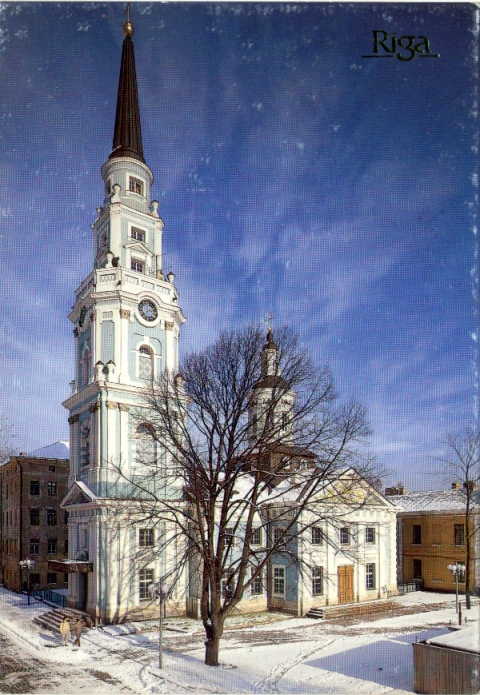
was mentioned for the first time in 1209. It has a fame of the best sample of Gothic architecture in the Baltics. It was meant to be the main church of the town. From the observation platform you can enjoy a wonderful bird's-eye view of Riga. Various concerts and exhibitions are held in the church.
is one of the oldest churches in Riga. Presently it is a Catholic cathedral. The steeple of St.Jacob's Church is the only one in Riga with a bell hanging outside. This became the city's distinctive feature. It was named Bell of Wretched Sinners. As the legend says, the bell was taken away at requests of discontented townspeople because it had a bad habit of ringing by itself when any unfaithful wife passed by!
 was built in the Dominican monastery ensemble after 1234, first as a chapel. After expulsion of the Dominicans in the period of Reformation, the building was privately owned. It was used as a stable and later as a weapon workshop.
In the XV century two monks were walled up there at their own will. Only a small window was used to pass food and drink to them. They wished to be canonized but didn't tolerate it long and therefore died. The Pope never canonized them to be sure that they had been moved
only by their ambitions. The spot where the monks were walled up, and buried, can easily be seen today. A cruciform barred aperture in the wall marks it.
 (Jugendstil) - There is no other European city where in its architectural image Art Nouveau has been presented so widely and splendidly. Architects of the Art Nouveau times used ornamentation in decoration of buildings for the same reasons that move women in the process of matching jewellery to their costumes.
The best known is Alberta Street designed by M.Eisenstein (father of a worldwide famous film director Sergey Eisenstein) - this is a real carnival of architecture.
- Air Museum of Latvia - situated in the pine forest on the banks of the Jugla Lake, this museum consists of 90 traditional wooden buildings of the 18th and 19th centuries. You can see the traditional rural buildings: farmsteads, craftsmen houses, windmills, churches and tavern from both the outside and inside. Different craft exhibitions are held in the museum on the regular basis. During the season each Thursday, Friday and Saturday you can see the different kind of craftsmans working as weavers, smiths, wicker-workmen etc. On summer weekends folk dancing is usually performed.
(1935, sculptor K. Zale) This monument stands in the heart of the city. It is more than half the height of the famous Statue of Liberty in New York, but it is one of the most distinguished monuments in Europe. It is 42 meters high and has 4 architectonic levels with a 19-meter.
The first national
song festival in Latvia was held in 1873 and has evolved into one of the most emotive events on the calendar. It's held every 5 years and climaxes with a giant choir singing in a huge open-air amphitheatre in the national capital.Big
midsummer celebrations start on 23 June, when people flock to the countryside to celebrate amid the lakes and pine forests. Special beers, cheeses and pies are prepared and wreaths strung from grasses, while flowers and herbs are hung around the home to bring good luck and keep families safe from evil spirits.Gadatirgus
is a big arts and crafts fair held in Riga in the first weekend in June. The Baltika Annual International Folklore Festival, which has taken place in each Baltic capital in turn since 1987, is a weeklong affair of music, dance, exhibitions and parades usually held in mid-July. It's next due to be held in Riga in 2000.Other music festivals include the
International Festival of Organ Music, held in the capital in June; the Opera Music Festival, held in Sigulda in July; the Festival of Ancient Music, at Bauska Castle in July; and Liepajas Dzintars, a rock festival held in Liepaja in mid-August. Ascension Day, a big Roman Catholic gig, is celebrated between 14 and 16 August in Aglona.
back to menu